SkillsPULSE Stakeholder Dialogue in Pisa: Bringing evidence and stakeholders together to address skills shortages and gaps
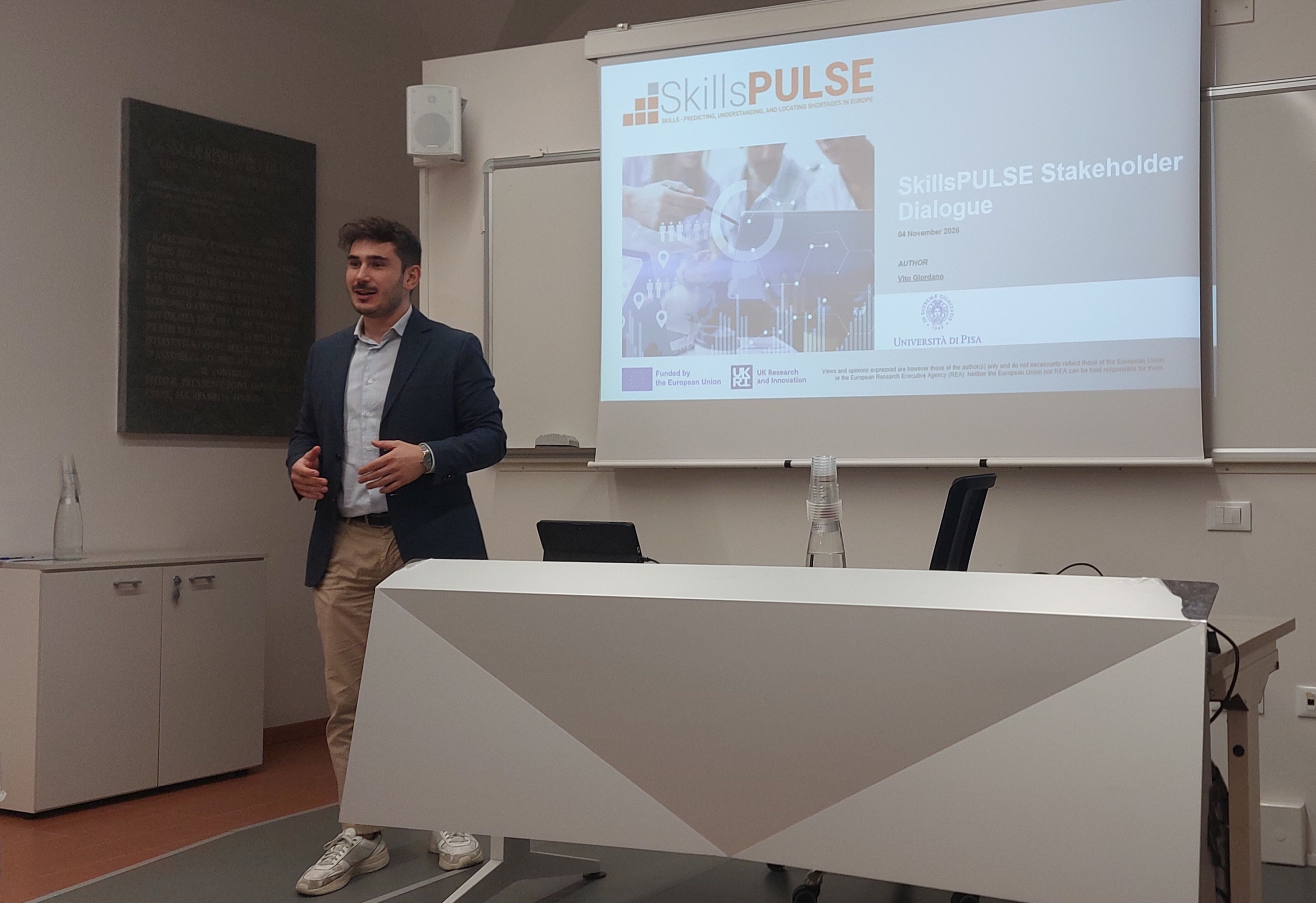
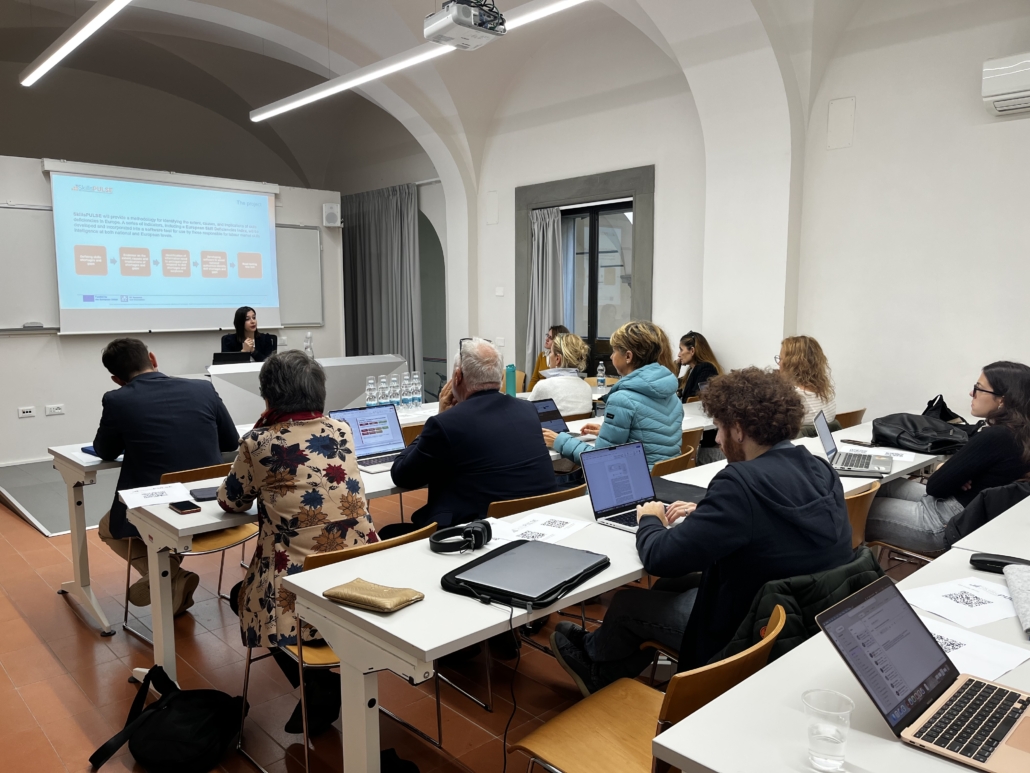
On 4 November 2026, the SkillsPULSE project organised a stakeholder dialogue in Pisa, Italy, bringing together representatives from industry, business organisations, training providers and other key stakeholders to discuss skills shortages and gaps in the Italian labour market.
Hosted by our project partner, Università di Pisa, the workshop provided a valuable opportunity to present and discuss the main findings of SkillsPULSE research for Italy, including insights from the European Skills Deficiencies Index (ESDI).
The event aimed to connect research evidence with stakeholders’ practical knowledge and experience, fostering an exchange of perspectives on how skills needs are identified, analysed and addressed at national and regional levels.
From research evidence to stakeholder perspectives
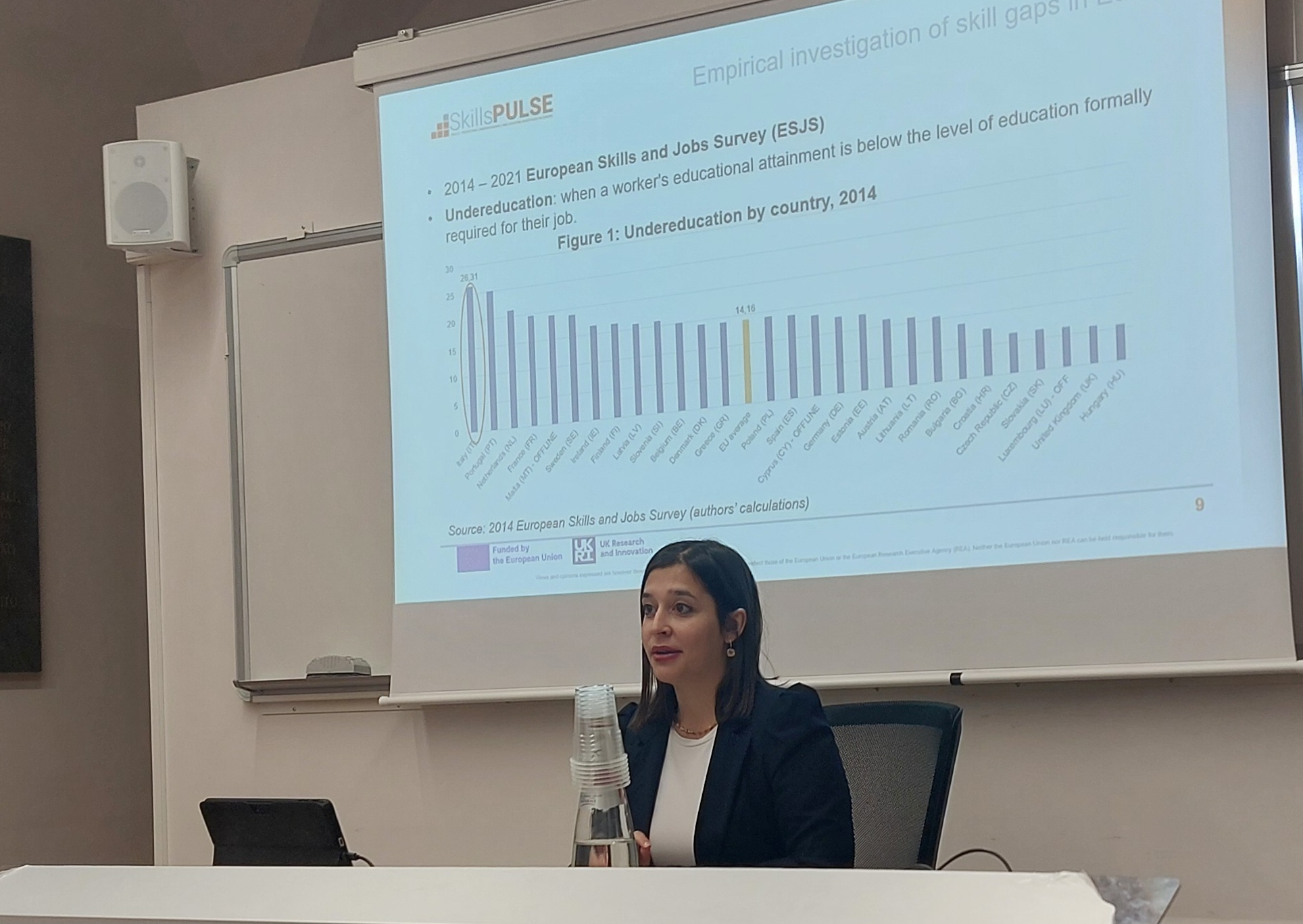
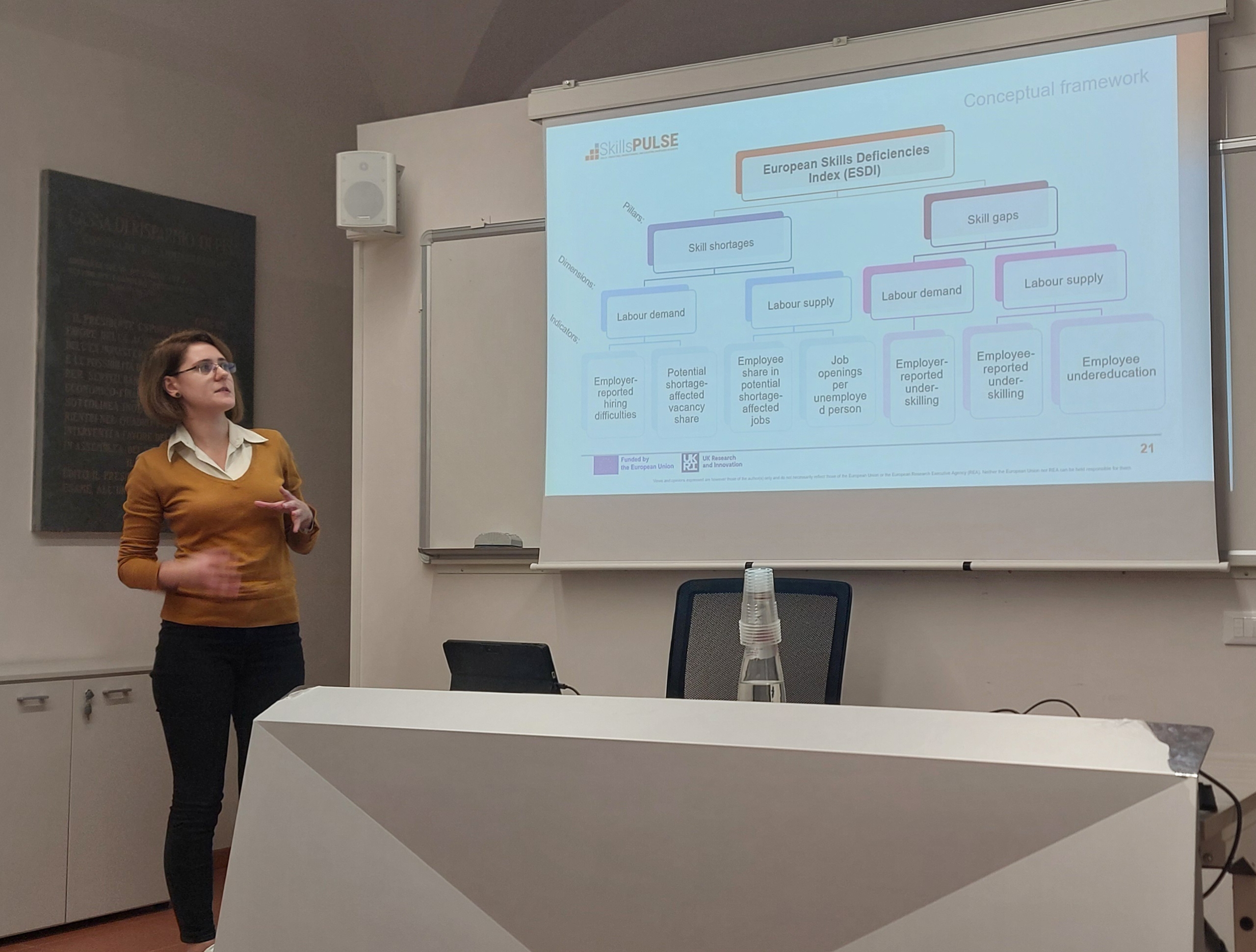
The workshop opened with an introduction to the SkillsPULSE project and its main findings for Italy, presented by Giulia Martorana, followed by a presentation of the European Skills Deficiencies Index (ESDI), its methodology and the insights it provides into skills deficiencies, delivered by Marina Ferent-Pipas, from Fondazione Giacomo Brodolini.
The subsequent sessions focused on stakeholders’ perspectives on skills shortages and gaps, offering participants the opportunity to share their analytical approaches, experiences and ongoing initiatives in skills intelligence.
The dialogue also explored the links between research findings and real labour market challenges, discussing the main drivers and effects of skills shortages, as well as policy challenges and opportunities for developing more effective responses.
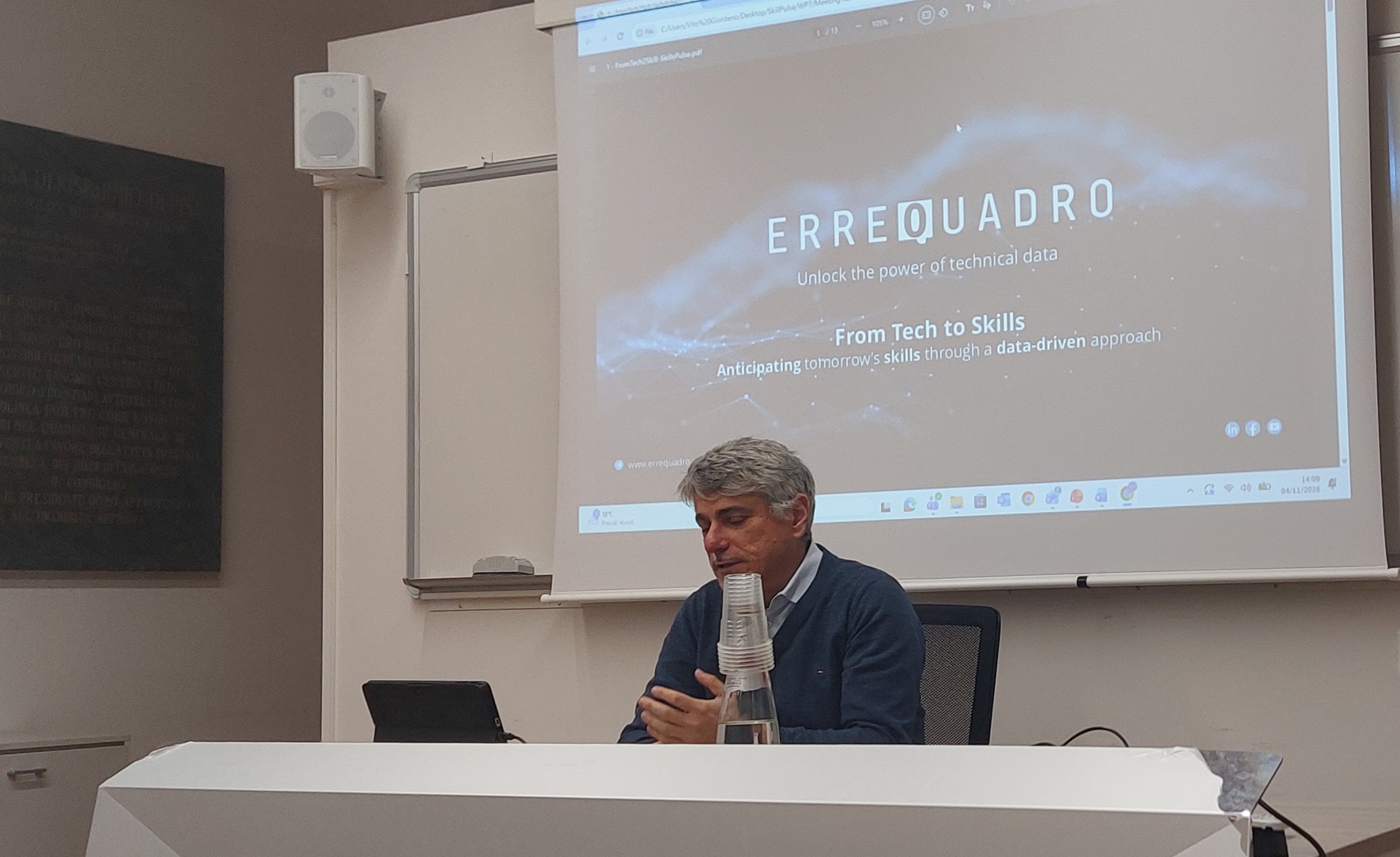
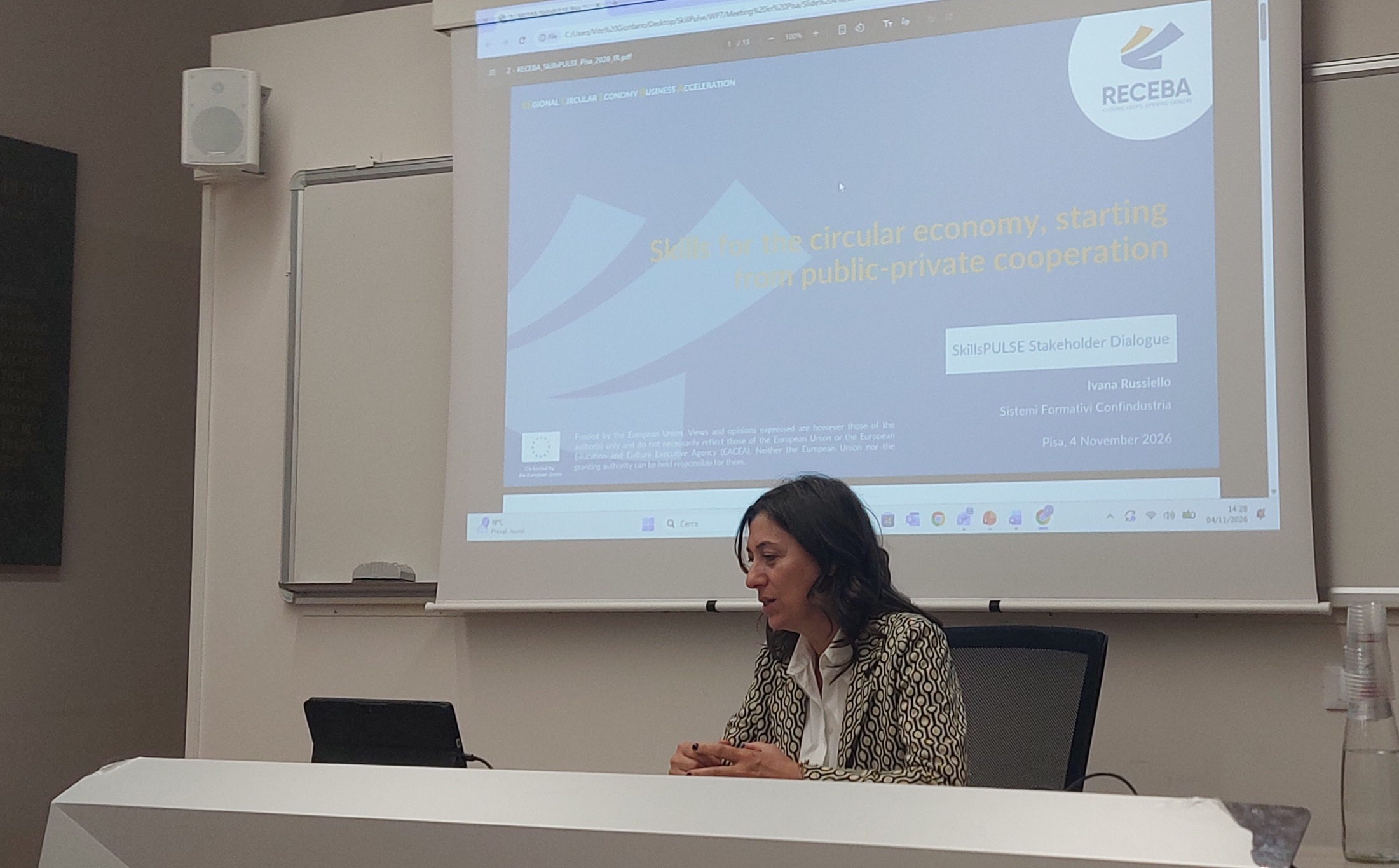
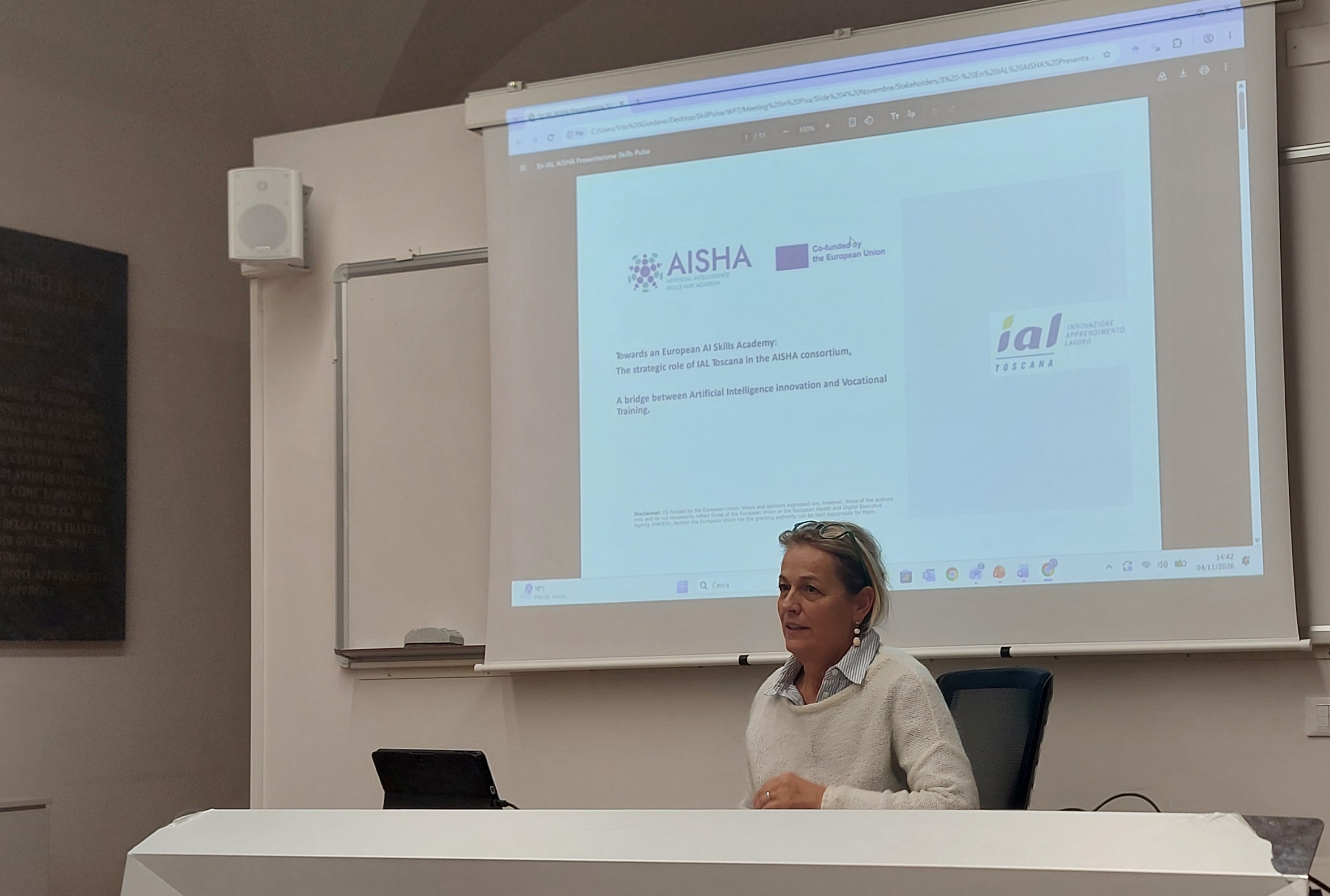
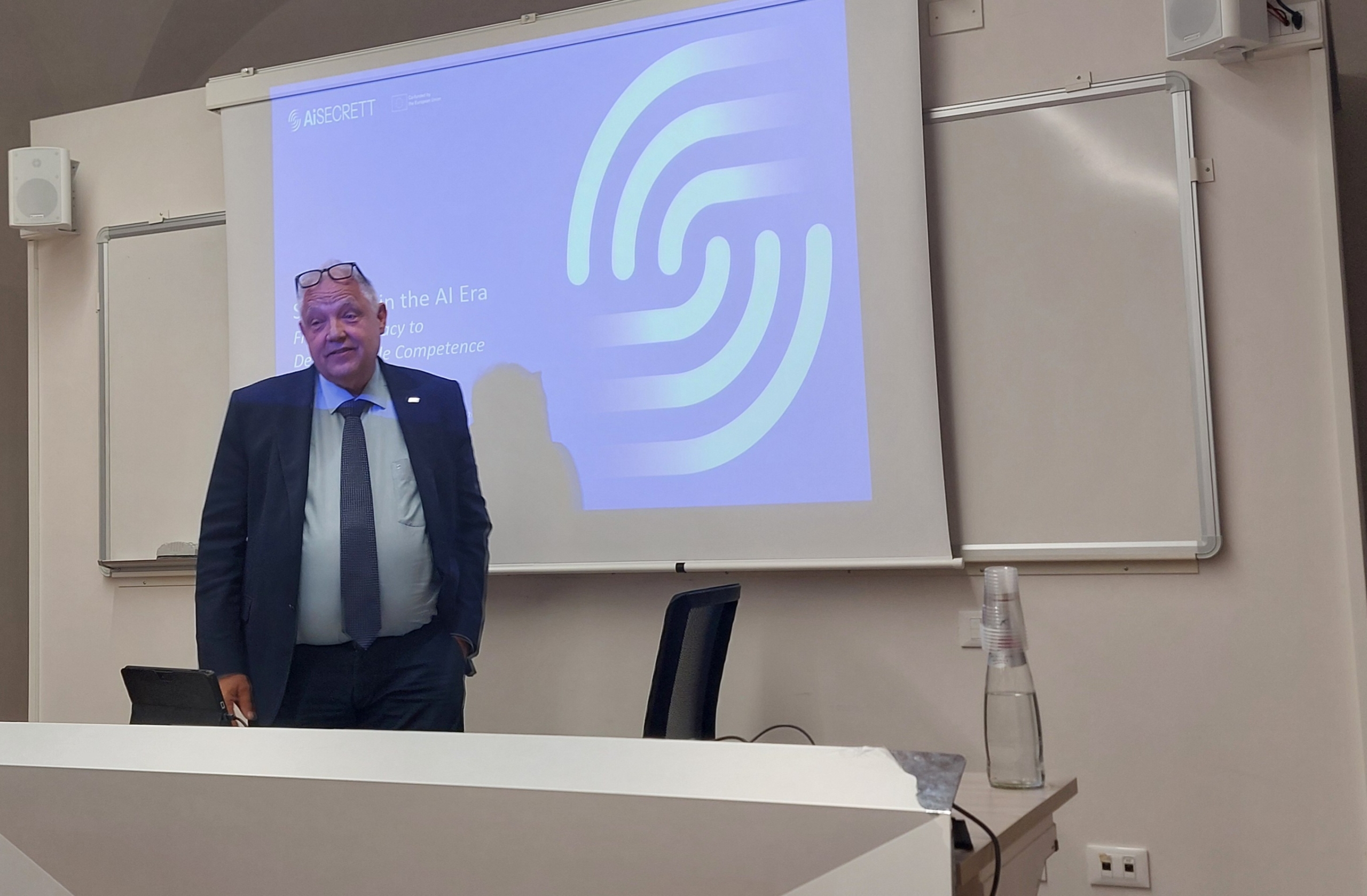
We are very grateful to all the speakers for sharing their expertise, perspectives and valuable insights: Riccardo Apreda, ErreQuadro; Ivana Russiello, Confindustria; Silvia Sermattei and Gabriella Pusztai, IAL Toscana; Peter Völk and Letizia Sgalambro, TÜV Thüringen Italia. Their contributions enriched the discussion and provided valuable perspectives from different areas of the Italian labour market and skills ecosystem.
We would like to extend our sincere thanks to Università di Pisa, and especially to our project partner Vito Giordano, for hosting the workshop and contributing to the success of the event.